
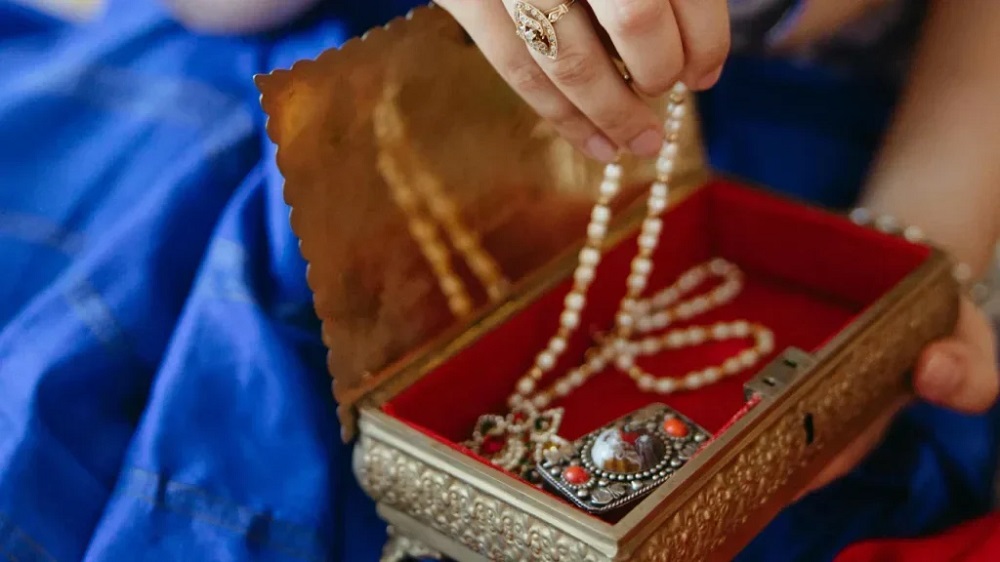
A well-curated jewelry collection represents sentimental memories, personal style, and substantial financial investment. Whether your jewelry box holds vintage family heirlooms, daily gold essentials, delicate pearls, or fashion pieces, improper storage can ruin them faster than daily wear. Tangled chains lead to snapped links, high humidity discolors fine metals, and hard gemstones easily gouge softer neighboring surfaces.
Preventing damage does not require professional vault equipment. It requires understanding the physical properties of different metals and gemstones, managing environmental conditions, and organizing each piece with adequate physical separation. Implementing deliberate storage habits preserves the shine, structural integrity, and value of your collection for generations.
The Environmental Factors That Destroy Fine Jewelry
Before considering organizers, boxes, or displays, you must address the surrounding room conditions. Environmental exposure is the silent culprit behind metal discoloration, gemstone dehydration, and adhesive breakdown.
-
Humidity and Moisture: High humidity levels accelerate oxidation, particularly for sterling silver, brass, and copper alloys. Never store your jewelry collection in a bathroom or near an open window. The constant steam from showers introduces moisture into jewelry compartments, causing tarnish and weakening strung beads.
-
Direct Sunlight and UV Exposure: Extended exposure to direct sunlight can bleach or alter the natural color of porous and semi-precious gemstones. Minerals such as amethyst, rose quartz, kunzite, and topaz can lose their vibrant saturation when left on open dressers under natural light.
-
Extreme Temperature Shifts: Rapid temperature fluctuations cause metals to expand and contract microscopically, which loosens prongs holding precious stones. Severe dry heat can also leach the natural moisture out of organic gems like opals, causing irreversible surface cracks known as crazing.
-
Chemical Exposure in the Air: Airborne chemicals from perfumes, hairsprays, body lotions, and even off-gassing wood from low-grade storage furniture can corrode fine jewelry finishes. Always store pieces inside clean, enclosed cases lined with neutral fabrics.
Metal by Metal: Segregating for Maximum Protection
Tossing all your jewelry together into an open dish is a recipe for surface abrasions. Different metals possess different levels of hardness and chemical reactivity, meaning they should never share unpadded contact.
-
Sterling Silver: Pure silver is exceptionally soft and readily alloys with copper, making it vulnerable to atmospheric sulfur. Store sterling silver in airtight compartments or dedicated anti-tarnish fabric pouches treated with silver-protecting agents. Keep silica gel packets inside these drawers to absorb residual ambient humidity.
-
Solid Gold and Platinum: Gold is a malleable metal. While 10k or 14k gold contains harder alloying metals, 18k and 24k pieces scratch under light friction. Platinum resists tarnishing but develops a soft patina from microscopic scratches over time. Keep gold and platinum rings and bracelets in individual velvet-lined slots to prevent direct metal-on-metal friction.
-
Plated Jewelry and Costume Pieces: Vermeil and flash-plated jewelry carry an ultra-thin layer of gold or rhodium over brass or base metals. Friction against harder metals quickly strips this outer plating away, exposing the core metal beneath. Store costume and plated jewelry completely separate from fine metals, preferably in individual small zip-top polyethylene bags.
Protecting Gemstones According to Mohs Hardness
The Mohs scale rates mineral hardness from one to ten, based on the ability of one mineral to scratch another. A diamond rates at ten, sapphire and ruby rate at nine, while an emerald rates around seven and a half. Softer organic materials like pearls rate between two and a half and four.
If you store a diamond ring loose beside an opal pendant, the diamond will scratch the surface of the opal. Even dust particles, which frequently contain quartz rated at seven, can abrade softer gemstones if you wipe them carelessly across a dry surface.
-
Hard Gemstones: Diamonds, sapphires, and rubies require individual enclosures, small fabric pouches, or dedicated padded slots. Even though they are durable, their sharp facets easily chip each other if stored together.
-
Soft and Porous Gemstones: Turquoise, lapis lazuli, malachite, and amber require soft, cushioned compartments. They are chemically porous and absorb oils, atmospheric moisture, and cleaners, which leads to permanent discoloration.
-
Organic Pearls: Pearls require unique care because they contain natural organic proteins and trace moisture. Storing pearls in airtight plastic containers suffocates them, leading to yellowing, dullness, and brittleness. Keep pearl strands flat in breathable silk or velvet pouches, and never hang them, as hanging stretches the delicate silk stringing thread over time.
Essential Storage Equipment and Organizers
Investing in practical storage gear protects your accessories and saves time during morning preparation.
-
Lined Jewelry Boxes: Look for multi-tier wooden or leather jewelry boxes lined with treated, anti-tarnish felt or velvet. Avoid raw, untreated wood interiors like oak or cedar, which emit acidic vapors that corrode silver and gold alloys over time.
-
Hanging Organizers for Necklaces: Tangled chains are one of the most common causes of snapped jewelry. Hang necklaces individually on padded wall hooks or inside tall armoires with specialized carousels. Ensure every necklace is fastened at the clasp before hanging to prevent the links from twisting onto themselves.
-
Compartmentalized Trays: Modular acrylic or velvet trays fit into dresser drawers, giving every ring, earring pair, and cuff a designated home. Trays with small, square grid layouts keep earrings paired and prevent friction damage.
-
Silica Gel Packets and Anti-Tarnish Strips: Drop small silica gel desiccant packs inside your jewelry drawers to maintain low humidity. Pair them with anti-tarnish paper strips, which actively absorb sulfur compounds from the surrounding air before they react with your silver.
Safe Habits for Traveling With Jewelry
Traveling introduces severe vibration, temperature changes, and impact risks. Packing jewelry loosely inside cosmetic pouches or suitcases often leads to crushed settings and tangled knots.
-
Use Structured Travel Cases: Soft cosmetic bags offer no crush protection against heavy luggage. Select a hard-shell travel case with custom interior compartments for rings, secured snap loops for necklaces, and pierced boards for earrings.
-
The Straw Method for Fine Chains: If you do not own a specialized travel case, thread fine chains through an ordinary drinking straw and secure the clasp at the end. This prevents the chain from knotting during transit.
-
Padded Ring Rolls: Store rings in secure, padded ring rolls rather than loose pouches. This keeps stones stationary and prevents prongs from snagging on surrounding fabrics.
-
Never Check Precious Jewelry: Always keep fine jewelry in your personal carry-on bag. Checked baggage experiences dramatic temperature drops in airplane cargo holds, rough handling by baggage systems, and heightened theft risks.
Regular Maintenance and Inspection Protocols
Proper storage works best when paired with routine cleaning and structural checkups. Storing dirty jewelry locks in oils, cosmetics, and perspiration, accelerating metal degradation over months of disuse.
-
Wipe Down After Wearing: Keep a clean, dry microfiber cloth next to your jewelry storage area. Before putting your pieces away for the evening, wipe off body oils, sweat, and cosmetic residue.Check Prongs and Clasps Periodically: Before tucking away expensive rings and pendants, inspect the settings. Gently tap the stone near your ear; if you hear faint clicking, the prongs have loosened and need professional adjustment. Catching loose stones before they drop inside a jewelry box prevents accidental loss.
-
Restring Beaded Strands: Over time, the silk thread used to string pearls and beaded necklaces stretches, absorbs body grime, and weakens. Check the knots between your pearls every year; if you see slack between the beads, have the strand professionally restrung before returning it to long-term storage.
Frequently Asked Questions
Can I store jewelry in clear plastic bags?
Yes, but with caveats. Resealable polyethylene or Mylar zip bags are excellent for keeping sterling silver and costume jewelry separated from air, dust, and moisture. However, never store pearls, opals, or untreated amber in airtight plastic, as organic and porous materials require natural airflow to avoid drying out, cracking, or losing their luster.
Why do silver jewelry pieces tarnish even inside a closed jewelry box?
Standard jewelry boxes are not completely airtight. Airborne sulfur compounds, which originate from ambient pollution, natural gas heating, and household materials, slowly penetrate closed drawers. To stop this reaction, place activated carbon paper or anti-tarnish strips inside your drawers alongside silica gel packets.
How should I store heavy statement cuffs and bangles?
Heavy metal cuffs and wide bangles should sit horizontally on padded cylindrical jewelry rolls or inside deep, velvet-lined drawers with wide dividers. Never stack heavy cuffs directly on top of each other, as the weight can warp their circular shape and scratch outer polished finishes.
Is it safe to hang diamond necklaces on open wall hooks?
Hanging fine necklaces on hooks prevents tangling, but leaving valuable diamond or gemstone necklaces in the open exposes them to ambient household dust, airborne grease, and direct sunlight. If you prefer hanging storage, choose an enclosed wall-mounted jewelry cabinet with a sealed door rather than an open wall rack.
What is the best way to store vintage watches alongside jewelry?
Store mechanical and quartz watches in dedicated watch boxes with individual cushions to protect their leather straps and metal bracelets from deformation. Ensure they sit well away from pieces containing magnetic clasps, as magnetic fields can disrupt the delicate balance springs of mechanical movements.
Can silica gel packets damage delicate jewelry by absorbing too much moisture?
Silica gel absorbs excess atmospheric humidity, which is beneficial for nearly all metals and hard gemstones. However, placing excessive desiccant packs in an enclosed space with delicate opals or unsealed organic pearls can dry out their trace moisture. For mixed collections, moderate use of silica packets in metal-heavy drawers is completely safe.
How do I store inherited jewelry pieces that have unknown metal compositions?
Treat unknown pieces as delicate items. Wrap each item individually in untreated, acid-free tissue paper or unbleached cotton flannel pouches before storing them in separate compartments. This prevents mysterious chemical reactions, stops soft metals from scratching, and protects underlying base materials until an appraiser tests them.