
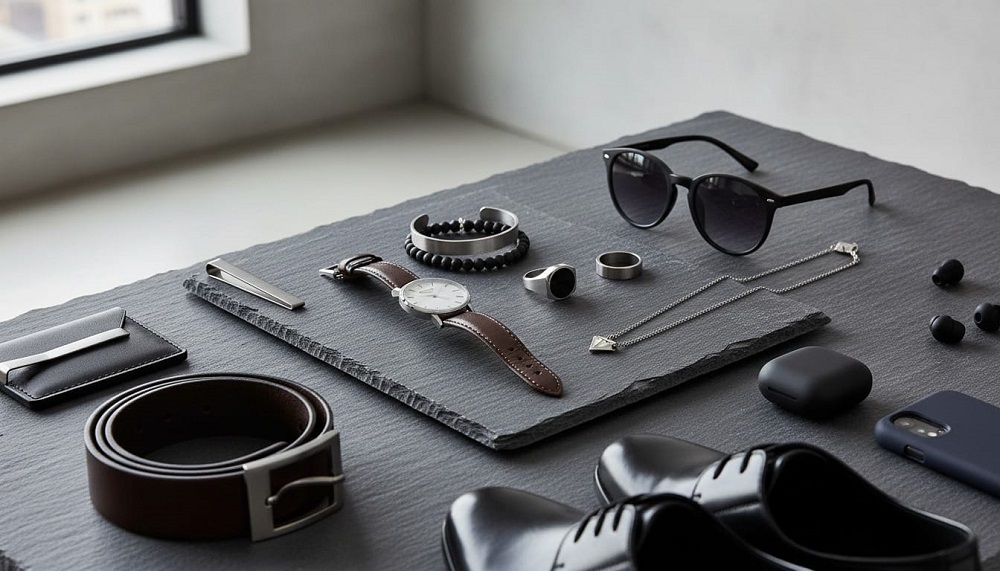
Updating a wardrobe often feels like an expensive undertaking. Many people assume that looking polished, creative, and current requires continually purchasing new suits, dresses, coats, and designer footwear. This cycle leads to closet clutter, decision fatigue, and financial strain. The truth is that the most stylish individuals rarely rebuild their wardrobes from scratch each season. Instead, they rely on the strategic power of accessories.
Accessories act as the connective tissue of personal style. They possess an outsized ability to alter proportions, shift formality levels, introduce rich textures, and refresh neutral garments you have worn for years. By focusing your shopping budget on intentional, compact items, you can achieve maximum visual transformation with minimal financial investment.
The Financial Logic of Strategic Accessorizing
Shopping for small accents offers a significantly higher return on investment than purchasing full statement garments. A bold patterned dress might only be wearable once or twice a month before feeling repetitive to coworkers and friends. In contrast, a finely crafted leather belt, a pair of architectural earrings, or an artisanal silk square can be worn multiple times a week across dozens of completely different ensembles.
- Lower cost per wear: Because accessories integrate across diverse categories of clothing, their cost per wear drops rapidly over time. A seventy-dollar leather belt worn two hundred times across three years costs thirty-five cents per wear, delivering far superior financial value compared to a cheap novelty top worn twice.
- Space efficiency: Accessories require minimal storage footprint. A compact drawer of curated belts, scarves, and jewelry provides more outfit combinations than an overcrowded closet bursting with fast-fashion impulse buys.
- Longevity across physical body changes: Weight fluctuations, lifestyle changes, and aging often make fitted garments unwearable over time. High-quality accessories remain functional regardless of minor shifts in body shape, making them safe long-term investments.
Belts as Structural Architecture
A belt is not merely a utilitarian tool to hold up loose pants. It is an architectural instrument that defines your waist, breaks up monotonous color blocks, and creates structural balance across varying garments.
- The classic medium-width leather belt: A smooth leather belt between one and one and a half inches wide in rich chestnut, dark chocolate, or black serves as a foundational piece. Worn through the loops of denim or tailored trousers, it instantly signals polish and intention.
- The waist-cinching belt: Layering a belt over an oversized blazer, a relaxed cardigan, or an unstructured shift dress introduces an hourglass silhouette. It takes garments that might otherwise swallow your frame and gives them intentional definition.
- The hardware factor: Pay close attention to the buckle. Solid brass, brushed silver, or understated matte gold hardware elevates simple outfits. Avoid cheap, hollow metal buckles that chip or turn orange after light friction, as low-grade hardware immediately cheapens the appearance of the entire outfit.
Silk and Wool Scarves: Texture, Movement, and Color
Fabric squares are among the most versatile, high-impact items anyone can own. A single printed scarf introduces color, pattern, and tactile interest without forcing you to commit to a brightly patterned coat or blouse.
- The neckerchief: A small square of silk or fine cotton tied closely around the collarbone adds a dash of European elegance to an ordinary white crewneck t-shirt or an unbuttoned oxford shirt. It bridges the gap between casual ease and tailored refinement.
- The hair accent: Weaving a colorful scarf through a braid, tying it around a low ponytail, or wearing it as a headband adds instant styling credit on days when your hair requires minimal effort.
- The bag accent: Tying a printed scarf around the base of a plain leather tote bag gives the handbag a custom look, making an everyday work bag feel fresh and seasonal without purchasing new leather goods.
- The lightweight wool wrap: In cooler weather, an oversized, fine-gauge wool or modal scarf provides warmth while introducing flowing vertical lines that visually elongate the body.
Transforming Looks Through Thoughtful Jewelry
Jewelry serves as the ultimate punctuation mark for an outfit. The goal of smart jewelry shopping is not amassing piles of cheap costume pieces, but acquiring distinctive, versatile accents that frame your face and draw the eye.
- Sculptural metal earrings: A pair of hollow, lightweight dome studs or clean geometric hoops in polished silver or warm gold brightens the complexion and frames the face. Even in plain knitwear and sweatpants, clean metal earrings communicate that your look is deliberate.
- Layerable chains of varying gauges: Rather than buying bulky pre-layered necklaces that tangle easily, invest in two or three separate chains of differing thicknesses and lengths. A fine snake chain paired with a slightly heavier link chain allows you to dial formality up or down based on your neckline.
- The signet or statement ring: A substantial ring worn on an index or pinky finger adds character during social interactions and professional meetings. Hands are constantly in motion, and a bold piece of jewelry on the hand leaves a memorable impression.
- The classic timepiece: A vintage-inspired watch with a slim leather strap or a clean mesh band functions as jewelry and signals professionalism. It conveys an appreciation for classic aesthetics that athletic smartwatches simply cannot match.
Footwear Accents: Socks, Tights, and Laces
One of the most overlooked, budget-friendly ways to transform an outfit is focusing on the space between the hem of your pants and the sole of your shoe. Footwear details provide an easy canvas for understated personality.
- Textured and ribbed hosiery: Replacing sheer, flimsy nylon tights with ribbed cotton, opaque wool blends, or subtle herringbone weaves instantly makes fall and winter dresses look cozy, intentional, and expensive.
- Contrast dress socks: Allowing a pop of rich olive, rust, or cream sock to show between the cuff of your trousers and your leather loafers or boots displays advanced styling confidence. It grounds the look and breaks up dark winter garments.
- Upgraded shoe laces: Swapping the worn, fraying laces of your favorite boots or canvas sneakers for waxed cotton laces or leather thongs completely revitalizes aging footwear for just a few dollars.
Eyewear and Hair Hardware
Faces are the focal point of human communication. Consequently, accessories worn close to the face exert an enormous influence on how your style is perceived.
- Architectural sunglasses: A classic pair of sunglasses with substantial acetate frames, durable hinges, and dark UV-protective lenses elevates any basic outfit. A trench coat and jeans paired with sharp tortoiseshell or black frames immediately looks cinematic and composed.
- Elevated hair clips and barrettes: Replace standard plastic claw clips and plain rubber bands with polished metal barrettes, tortoiseshell combs, or acetate French hair pins. These small swaps turn a quick updo into a sophisticated styling choice.
- Hats with structured crowns: A wool felt fedora, a structured cap, or an unbranded cotton baseball cap in washed canvas gives casual streetwear a clean focal point while resolving challenging weather days.
The Art of Restraint: Avoiding Over-Accessorizing
The secret to accessorizing with impact is editing. When too many accessories compete for attention, their individual beauty is canceled out, creating a cluttered, chaotic appearance.
- Follow the single-hero rule: Pick one dominant accessory to serve as the hero piece of your outfit. If you choose an oversized silk scarf, keep your earrings minimal and skip the statement necklace. If your earrings are large and sculptural, leave your neck bare and focus on a ring.
- Match the mood to the occasion: Heavy metallic cuffs and crystal accents clash with rugged outdoor casual wear. Choose accessories whose materials share a similar visual weight and textural language with your clothing.
- Check the mirror before leaving: Take a step back and examine your total reflection. If your eyes dart frantically across your outfit without finding a clear resting place, remove one accessory. Elegance lies in confident curation.
Frequently Asked Questions
How do I know which metal tone suits my skin tone best?
Look at the natural undertones in your skin and the veins on your inner wrist. Cool undertones with blue or purple veins generally harmonize best with silver, white gold, and platinum. Warm undertones with greenish veins pair naturally with yellow gold, brass, and copper. Neutral undertones can seamlessly mix both metals.
What is the most durable material for budget-friendly jewelry?
Stainless steel and titanium with physical vapor deposition coating are exceptional for budget-conscious jewelry. Unlike brass or copper bases, stainless steel will not turn your skin green, resists tarnishing completely, and withstands daily exposure to water and hand soap without flaking.
How can I stop silk scarves from slipping off smooth clothing?
Use a small metal scarf ring or a disguised safety pin pinned from the inside of your garment. You can also lightly mist the fabric beneath the scarf with static guard, or knot the silk scarf securely around an under-layer like a shirt collar rather than draping it loose over slick polyester.
Is it acceptable to mix black and brown leather accessories in the same outfit?
Yes, modern styling actively embraces pairing black and brown. The key is ensuring the tones look intentional rather than accidental. Pairing a black coat with rich cognac boots and a matching cognac belt creates an earthy, sophisticated contrast that looks more dynamic than strictly matching everything in black.
How many accessories should someone wear at one time?
A standard rule of thumb is the rule of three. Aim for three visible accessories per outfit, excluding your wedding band or prescription eyeglasses. For example, a belt, a pair of statement earrings, and a structured handbag create visual completeness without overwhelming your silhouette.
What is the easiest way to clean and maintain metal hardware on belts and bags?
Wipe down hardware regularly with a dry, soft microfiber cloth to remove acidic oils from your fingers. For tarnished brass, apply a pea-sized amount of specialized metal polish with a cotton swab, taking care to avoid touching surrounding leather or fabric, and buff gently to restore shine.
How can I make an inexpensive handbag look significantly more high-end?
Remove cheap, noisy metallic novelty charms and branded plastic tags immediately. Condition the material with a neutral leather balm if it is genuine hide, keep the interior uncluttered so it retains its natural shape, and swap flimsy shoulder straps for a structured leather or woven canvas strap.